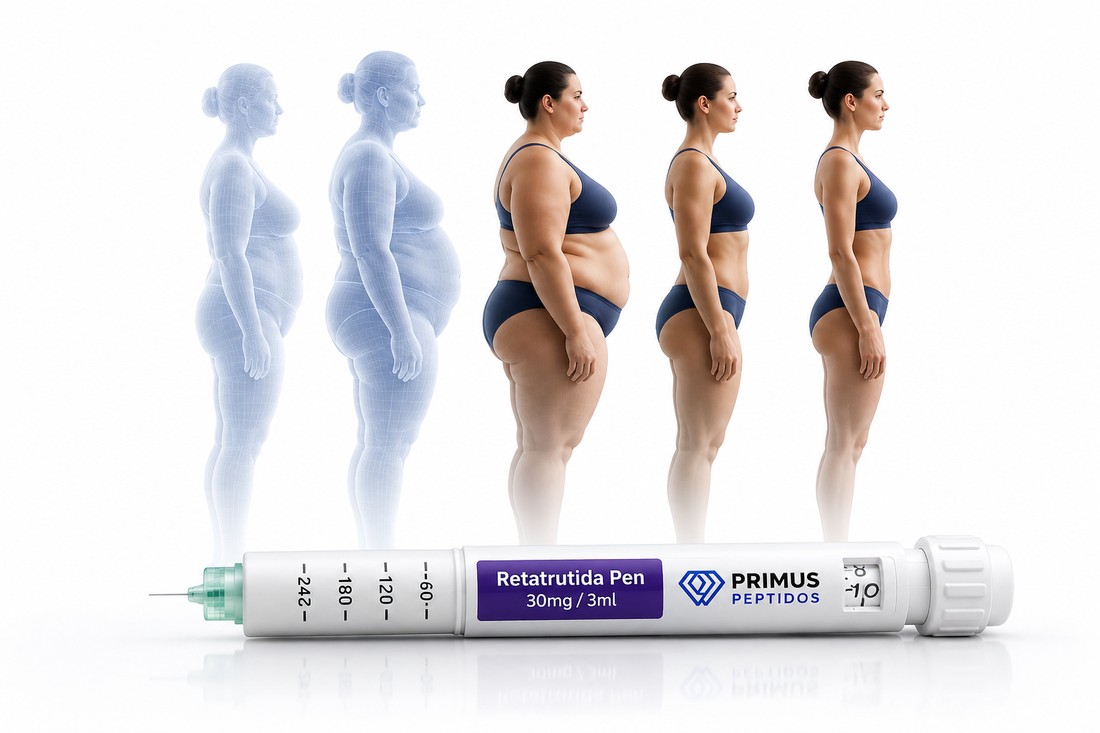
Latest study from Eli Lilly labs: retatrutide is revolutionizing weight loss
WHAT IS RETATRUTIDE?
Retatrutide is a weekly-administered triple hormone-receptor agonist developed by Eli Lilly. It simultaneously activates three receptors: GIP (glucose-dependent insulinotropic polypeptide), GLP-1 (glucagon-like peptide-1) and glucagon. This triple action fundamentally sets it apart from every previous compound.
While semaglutide activates only GLP-1, and tirzepatide activates GLP-1 + GIP, retatrutide adds the glucagon receptor. That third receptor completely changes the therapeutic scope: it is not simply more potent for weight loss — it acts on the cascade of metabolic damage at multiple levels at once.
«Obesity drives more than 200 diseases. Historically we have treated them one by one and in silos. Retatrutide can change that.»
— Dr. Ania Jastreboff, Yale School of Medicine, TRIUMPH-1 principal investigator
| Compound | GLP-1 | GIP | Glucagon | Type |
|---|---|---|---|---|
| Semaglutide | ✓ | — | — | Mono |
| Tirzepatide | ✓ | ✓ | — | Dual |
| Retatrutide | ✓ | ✓ | ✓ | Triple |
Mechanism of action compared
THE CLINICAL DATA
TRIUMPH-1 — Weight loss at 80 weeks
| Dose | Average loss | ≥ 25% | ≥ 30% | ≥ 35% | Waist |
|---|---|---|---|---|---|
| 4 mg | −19.0% (−47.2 lbs) | 27.8% | 15.3% | 5.9% | −16.3 cm |
| 9 mg | −25.9% (−64.4 lbs) | 52.9% | 37.9% | 20.8% | −21.8 cm |
| 12 mg | −28.3% (−70.3 lbs) | 62.5% | 45.3% | 27.2% | −24.1 cm |
| Placebo | −2.2% (−5.5 lbs) | 2.2% | 0.5% | 0.3% | −3.6 cm |
TRIUMPH-1 Phase 3 · Efficacy Estimand · Baseline: 112.7 kg · BMI 40.0 · n=2,339
104-week extension (BMI ≥35, n=532): the 12 mg group reached 85.0 lbs (30.3%) of weight loss — a level historically associated with bariatric surgery. 65.3% moved out of the obesity range (BMI <30). 33.3% reached a healthy weight (BMI <25).
TRANSCEND-T2D-1 — Type 2 diabetes, 40 weeks
| Dose | HbA1c reduction | HbA1c < 7.0% | Normoglycemia < 5.7% | Weight loss |
|---|---|---|---|---|
| 4–12 mg | up to −2.0% | up to 90% | up to 46% | up to −36.6 lbs |
| Placebo | minimal | baseline | baseline | minimal |
HbA1c (glycated hemoglobin): reflects average blood sugar over the previous 3 months. A normal value is below 5.7%. In diabetics, the standard clinical target is to drop below 7.0%. A 2-point reduction — like the one obtained with retatrutide — is equivalent to going from poor control to optimal control, cutting the risk of blindness, kidney damage, amputations and heart attacks. That 46% reached full normoglycemia means they were, analytically speaking, no longer diabetic.
1. CARDIOMETABOLIC BIOMARKERS
Cardiometabolic biomarkers are the warning signals the body sends when metabolism fails. Bad cholesterol clogs the arteries. Elevated triglycerides damage the pancreas and blood vessels. High blood pressure deteriorates them chronically. And hsCRP — the most important one — measures the silent internal inflammation that lies at the root of heart attacks, strokes, diabetes and certain cancers.
A person can have seemingly acceptable cholesterol and still be at high risk of a heart attack if their hsCRP is elevated. The four together form the complete picture of cardiovascular risk, and obesity pushes all of them up simultaneously.
| Biomarker | TRIUMPH-1 · 80 wk · 12 mg | TRANSCEND-T2D-1 · 40 wk |
|---|---|---|
| Triglycerides | − 41.0% | − 39.6% |
| Non-HDL cholesterol | − 24.2% | − 19.8% |
| Systolic blood pressure | − 12.3 mmHg | − 6.4 mmHg |
| Waist | − 9.5 in (− 24.1 cm) | − 4.9 in (− 12.4 cm) |
| hsCRP (inflammation) | Significant improvement* | Significant improvement* |
* hsCRP: significant improvement reported in the press release of 21 May 2026. Exact values pending publication.
A 41% reduction in triglycerides over 80 weeks reverses one of the factors most closely tied to metabolic syndrome. The drop in hsCRP shows that retatrutide does not just cause weight loss: it switches off the underlying systemic inflammation, attacking the root cause of cardiovascular disease.
2. FATTY LIVER (MASLD)
The liver is the body's factory: it filters the blood, processes nutrients and eliminates toxins and used hormones. When it accumulates excess fat — which happens in practically everyone with abdominal obesity — it stops doing its job properly, silently and without symptoms.
The consequences of a fatty liver are systemic:
- It does not detoxify correctly — toxins circulate through the body longer than they should.
- It does not clear used estrogens — loss of testosterone in men, hormonal dysregulation in women.
- It manufactures excess cholesterol and triglycerides — driving up the biomarkers from the previous point.
- It contributes to insulin resistance — a direct road to type 2 diabetes.
- Left untreated, it progresses toward fibrosis, cirrhosis and liver cancer.
Lilly is studying retatrutide specifically in MASLD as an independent indication in its Phase 3 program. The glucagon receptor — unique to retatrutide versus tirzepatide and semaglutide — directly activates the burning of liver fat. The 41% reduction in triglycerides is also an indirect marker of hepatic improvement.
3. VISCERAL FAT: THE HIDDEN ORGAN
Visceral fat — the fat that surrounds the internal organs in the abdomen — is not inert stored fat. It is metabolically active: it works like a gland that continuously and silently manufactures and secretes IL-6 (interleukin 6) and TNF-alpha (tumor necrosis factor), simply by existing in excess.
- hsCRP and systemic inflammation: the liver receives those cytokines and produces hsCRP. Visceral fat is the root cause.
- Insulin resistance: TNF-alpha blocks the insulin receptors. The pancreas compensates by producing more insulin, but the cells do not respond — a direct road to type 2 diabetes.
- Inflamed joints: IL-6 inflames them from within, chemically. Confirmed in TRIUMPH-1: a 73.1% reduction in knee pain (WOMAC).
- Sleep apnea: the cytokines fragment the architecture of deep sleep. A 60.6% reduction in apnea events per hour with 12 mg.
- Inefficient recovery: a body in a permanent state of alarm does not enter repair mode. Muscle does not recover properly.
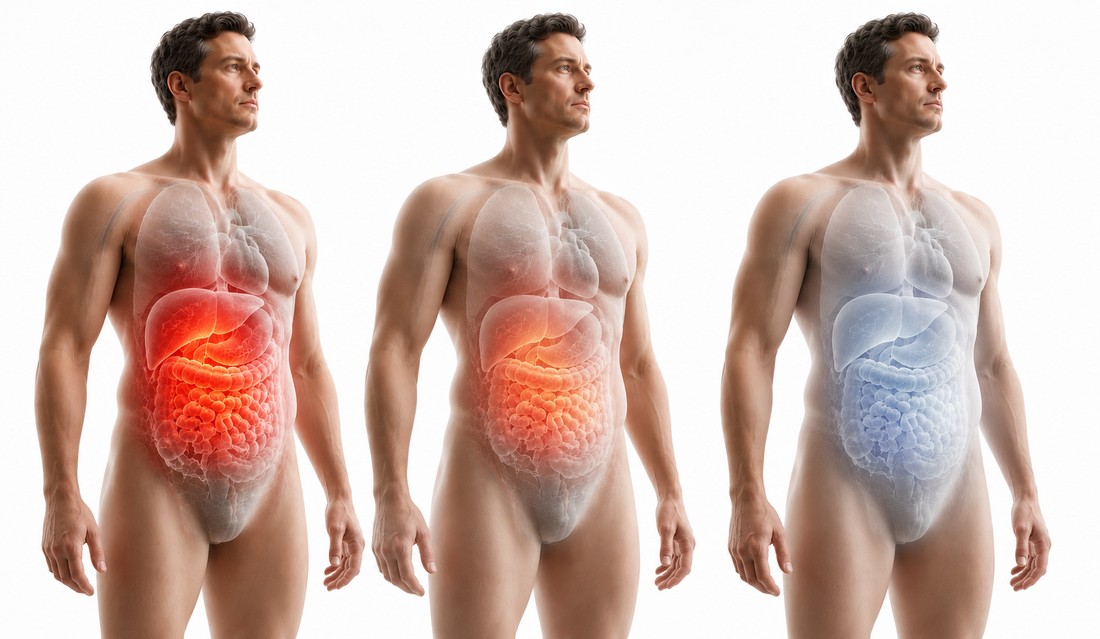
The 24.1 cm waist reduction with 12 mg at 80 weeks is the direct measure of how much visceral fat has been eliminated — and therefore how much that inflammation factory that sickens the liver, arteries, joints and brain simultaneously has been reduced.
4. OXIDATIVE STRESS
The body constantly produces free radicals as it generates energy. Under normal conditions it neutralizes them with antioxidants. Oxidative stress occurs when there are more radicals than it can neutralize: they attack the cells — their membranes, their DNA, their proteins — causing silent, cumulative cellular damage.
- Visceral fat continuously drives up the production of free radicals.
- Fatty liver generates direct oxidative stress, accelerating its own deterioration.
- It oxidizes LDL cholesterol — far more dangerous when oxidized, it forms the plaques that cause heart attacks.
- It damages the insulin-producing cells of the pancreas, worsening diabetes.
- It prematurely ages tissues: skin, muscle, joints, brain.
By reducing visceral fat and inflammation, retatrutide breaks the chain: less visceral fat → fewer cytokines → less inflammation → fewer free radicals → less cellular damage.
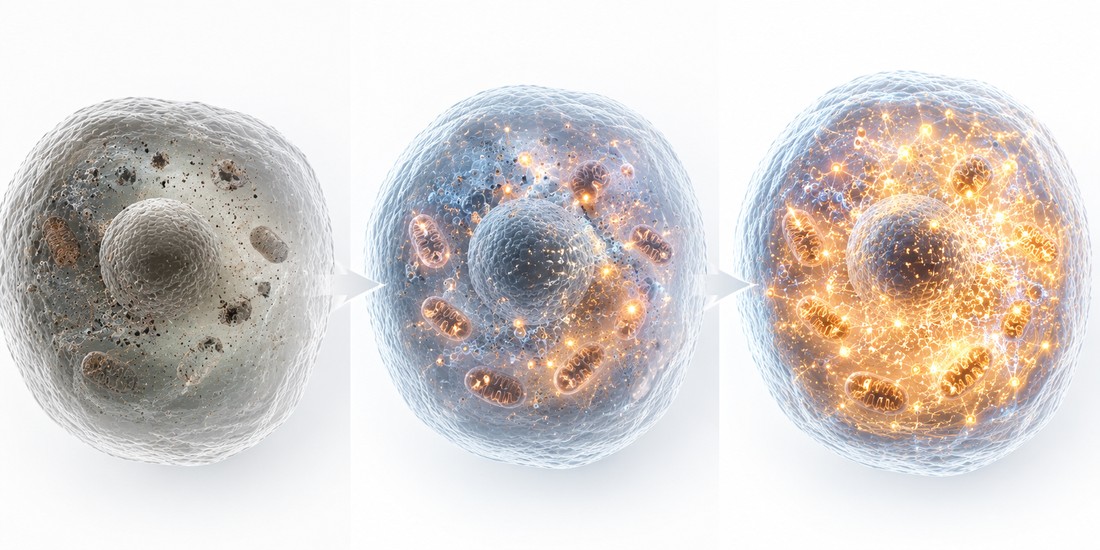
5. AUTOPHAGY: THE CELLULAR CLEAN-UP
Autophagy is the cell's internal cleaning system: when cells have damaged components, defective proteins or waste, it destroys and recycles them. Without efficient autophagy, cells accumulate internal garbage — and that build-up is linked to Alzheimer's, cancer, diabetes and cardiovascular disease.
Obesity blocks it on multiple levels: chronic inflammation inhibits it, oxidative stress overwhelms it, and chronically elevated insulin deactivates it. Fatty liver additionally reduces hepatic autophagic capacity.
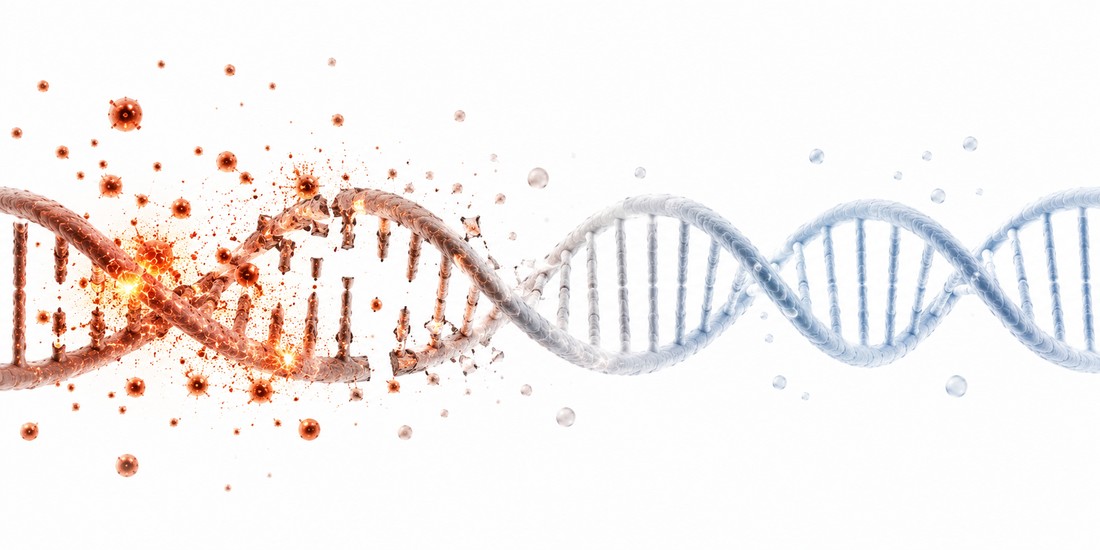
A 28.3% weight loss like the one retatrutide produces reactivates that cellular clean-up system. The insulin normalization demonstrated in TRANSCEND-T2D-1 — HbA1c −2.0%, 46% reaching normoglycemia — is one of the direct activators of autophagy. Retatrutide rejuvenates tissues at the cellular level.
6. MITOCHONDRIA AND GLUCAGON: THE KEY DIFFERENTIATOR
Mitochondria
Mitochondria are the power plant of every cell: they convert glucose and fat into usable energy. Chronic inflammation and oxidative stress damage them directly. A damaged mitochondrion produces less energy and more free radicals — a vicious circle. Visible consequences: chronic fatigue, muscle that will not recover, a slow metabolism and an inability to burn fat efficiently.
Glucagon: why retatrutide is different
Glucagon is the hormone opposite to insulin: when blood sugar drops, the pancreas secretes it so the liver releases glucose and burns fat. Retatrutide is the only compound of its class that activates the glucagon receptor in addition to GIP and GLP-1.
- It orders the liver to burn fat directly — attacking fatty liver at its root.
- It increases basal energy expenditure — speeding up metabolism independently of diet.
- It activates fat-burning inside the mitochondria — improving mitochondrial function.
- It is the bridge between weight loss and metabolic recovery at the cellular level.
This explains retatrutide's superiority over tirzepatide: it is not just appetite suppression — it is activating fat-burning from multiple simultaneous fronts, including mitochondrial metabolism.
CONCLUSION: A PARADIGM SHIFT
Retatrutide produces the largest weight loss documented in a Phase 3 pharmacological trial. But reducing it to 'the best fat burner' stays on the surface. The data show that it acts on every link in the metabolic chain simultaneously:
| Damage mechanism | Retatrutide effect — clinical data |
|---|---|
| Visceral fat — inflammation factory | Waist − 24.1 cm at 80 weeks |
| hsCRP / systemic inflammation | Significant documented reduction |
| Triglycerides and cholesterol | − 41% triglycerides / − 24.2% non-HDL |
| Blood pressure | − 12.3 mmHg systolic |
| Fatty liver (MASLD) | Burns liver fat via the glucagon receptor |
| Insulin resistance / diabetes | HbA1c − 2.0% / 46% reach normoglycemia |
| Inflamed joints | − 73.1% knee pain (WOMAC) |
| Sleep apnea | − 60.6% apnea events per hour |
| Oxidative stress / cellular damage | Chain reduction via lower inflammation |
| Autophagy / cellular clean-up | Restoration via insulin normalization |
| Mitochondrial function | Improvement via glucagon-receptor activation |
Obesity is not a cosmetic problem. It is a systemic metabolic disease that sickens the liver, inflames the arteries, destroys the joints, fragments sleep, blocks cellular clean-up and deteriorates the mitochondria. Retatrutide is the first compound that attacks that cascade of damage in a truly simultaneous way.
The numbers are extraordinary. But the real change is conceptual: retatrutide transforms the treatment of obesity from a cosmetic intervention into a foundational metabolic-medicine intervention.
Sources: Eli Lilly & Company, TRIUMPH-1 press release (21 May 2026) | ADA 86th Scientific Sessions press release (6 June 2026)
Retatrutide is an investigational compound not approved for clinical use as of the date of this document. This document is strictly informational. Research use only. It does not constitute medical advice or a therapeutic recommendation.
Video available in English
Information about research peptides
INFOPEPTIDOS is an independent informational guide about research peptides. We bring together in one place clear profiles of each peptide —Semaglutide, Tirzepatide, BPC-157, TB-500, Ipamorelin and many more— with their typical dose, route of administration, cycle, benefits and side effects, all explained in plain language.
You will find the peptides organized by goal: weight loss and metabolism, performance and recovery, beauty and anti-aging, cognitive function and mood, and sexual health. In addition, our practical guides explain how to reconstitute a peptide, how to store it, how to calculate the exact dose in the syringe and how to combine peptides safely.
All information is educational and informational, and does not replace the advice of a healthcare professional. If you want to purchase high-purity research peptides, you can do so at our partner store, Primus Péptidos.